Gravitational Waves: Discoveries and Future Detectors
Matthew Evans - Massachusetts Institute of Technology (MIT) - Department of Physics


Smith, K. (2018). CHIME: the Canadian Hydrogen Intensity Mapping Experiment. Perimeter Institute. https://pirsa.org/18040069
Smith, Kendrick. CHIME: the Canadian Hydrogen Intensity Mapping Experiment. Perimeter Institute, Apr. 04, 2018, https://pirsa.org/18040069
@misc{ pirsa_PIRSA:18040069,
  doi = {10.48660/18040069},
  url = {https://pirsa.org/18040069},
  author = {Smith, Kendrick},
  keywords = {Other},
  language = {en},
  title = {CHIME: the Canadian Hydrogen Intensity Mapping Experiment},
  publisher = {Perimeter Institute},
  year = {2018},
  month = {apr},
  note = {PIRSA:18040069 see, \url{https://pirsa.org}}
}
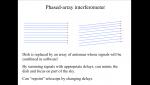
CHIME is a new interferometric telescope at radio frequencies 400-800 MHz.The mapping speed (or total statistical power) of CHIME is among the largestof any radio telescope in the world, and the technology powering CHIME could be used to build telescopes which are orders of magnitude more powerful.This breakthrough sensitivity has the power to revolutionize radio astronomy, but meeting the computational challenges will require breakthroughs on the algorithmic side. I'll give a status update on CHIME, with an emphasis on new algorithms developed at Perimeter to search for fast radio bursts (FRB's) and pulsars.
Matthew Evans - Massachusetts Institute of Technology (MIT) - Department of Physics
Kiyoshi Masui - Massachusetts Institute of Technology (MIT)
Simon Foreman - Arizona State University
Kendrick Smith - Perimeter Institute for Theoretical Physics
Kendrick Smith - Perimeter Institute for Theoretical Physics
Kendrick Smith - Perimeter Institute for Theoretical Physics