

1 - 12 of 16955 Results
Format results
-

Panel Discussion
-
Gilbert Holder University of Illinois Urbana-Champaign
- Gwen Rudie
-

A hydrosimulations-based approach to relate the Fast Radio Burst dispersion measure -- redshift relation to the suppression of matter power spectrum
Kritti Sharma California Institute of Technology
PIRSA:25080007
Probing Baryonic Feedback and Cosmological Tension with Fast Radio Bursts: Insights from CAMELS
Isabel Medlock Yale University
PIRSA:25080006
Probing cosmic plasmas at sub-au scales with fast radio bursts
Stella Koch Ocker California Institute of Technology
Probing the Effect of Feedback on the IGM with FRBs
Khee-Gan Lee Kavli Institute for the Physics and Mathematics of the Universe

The Lyman-Alpha Tomography IMACS Survey (IMACS)
Andrew Newman Carnegie Observatories
-
-
Panel Discussion
-
Gilbert Holder University of Illinois Urbana-Champaign
- Gwen Rudie
-
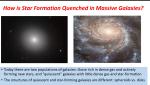
Mergers, Radio Jets, and Quenching Star Formation in Massive Galaxies: Quantifying Their Synchronized Cosmic Evolution and Assessing the Energetics
Timothy HeckmanThe existence of a population of massive quiescent galaxies with little to no star formation poses a challenge to our understanding of galaxy evolution. The physical process that quenched the star formation in these galaxies is debated, but the most popular possibility is that feedback from supermassive black holes lifts or heats the gas that would otherwise be used to form stars. In this paper, we evaluate this idea in two ways. First, we compare the cumulative growth in the cosmic inventory of the total stellar mass in quiescent galaxies to the corresponding growth in the amount of kinetic energy carried by radio jets. We find that these two inventories are remarkably well-synchronized, with about 50% of the total amounts being created in the epoch from z ≈ 1 to 2. We also show that these agree extremely well with the corresponding growth in the cumulative number of major mergers that result in massive (>10^11 M_ ʘ) galaxies. We therefore argue that major mergers trigger the radio jets and also transform the galaxies from disks to spheroids. Second, we evaluate the total amount of kinetic energy delivered by jets and compare it to the baryonic binding energy of the galaxies. We find the jet kinetic energy is more than sufficient to quench star formation, and the quenching process should be more effective in more massive galaxies. We show that these results are quantitatively consistent with recent measurements of the Sunyaev–Zel'dovich effect seen in massive galaxies at z ≈ 1.-
A hydrosimulations-based approach to relate the Fast Radio Burst dispersion measure -- redshift relation to the suppression of matter power spectrum
Kritti Sharma California Institute of Technology
PIRSA:25080007The effects of baryonic feedback on matter power spectrum are uncertain. Upcoming large-scale structure surveys require percent-level constraints on the impact of baryonic feedback effects on the small-scale ($k \gtrsim 1\,h\,$Mpc$^{-1}$) matter power spectrum to fully exploit weak lensing data. The sightline-to-sightline variance in the fast radio bursts (FRBs) dispersion measure (DM) correlates with the strength of baryonic feedback and offers unique sensitivity at scales upto $k \sim 100\,h\,$Mpc$^{-1}$. We analytically compute the variance in FRB DMs using the electron power spectrum, which is modeled as a function of cosmological and feedback parameters in IllustrisTNG suite of simulations in CAMELS project. We demonstrate its efficacy in capturing baryonic feedback effects across several simulation suites, including SIMBA and Astrid. We show that with 10,000 FRBs, the suppression of the matter power spectrum can be constrained to percent-level precision at large scales (k < 1 h/Mpc) and ~10% precision at small scales (k > 10 h/Mpc). Insights into the impact of baryons on the small-scale matter power spectrum gained from FRBs can be leveraged to mitigate baryonic uncertainties in cosmic shear analyses. -
Probing Baryonic Feedback and Cosmological Tension with Fast Radio Bursts: Insights from CAMELS
Isabel Medlock Yale University
PIRSA:25080006Fast Radio Bursts (FRBs) are powerful probes of diffuse ionized baryons, offering unique insights into the cosmic ecosystems from the circumgalactic medium (CGM) to the intergalactic medium (IGM). Utilizing simulation suites from the CAMELS project—IllustrisTNG, SIMBA, and Astrid—we analyze FRB dispersion measures (DMs) across models with varying cosmological and astrophysical parameters. Our analysis shows that DM radial profiles around the CGM are highly sensitive to baryonic effects, with strong ejective feedback causing baryon spread in and around halos. On larger scales, we introduce "baryon spread" as a robust measure of baryonic impact on the matter power spectrum. Our study reveals a strong correlation between FRB statistics, particularly the F-parameter, and baryon spread in CAMELS simulations, independent of subgrid galaxy formation models. This correlation offers a novel pathway for using FRBs to correct for baryonic effects in ongoing and upcoming cosmological surveys, such as DESI, Euclid, Roman, and Rubin. With large FRB samples, our findings highlight the pivotal role of FRBs in bridging astrophysics and cosmology, offering new constraints on the CGM and enhancing the power of next-generation cosmological surveys. -
Probing cosmic plasmas at sub-au scales with fast radio bursts
Stella Koch Ocker California Institute of Technology
Fast radio bursts (FRBs) are dispersed and scattered by plasma density fluctuations along the line-of-sight, making them sensitive probes of diffuse ionized gas across interstellar, circumgalactic, and intergalactic media. In this talk I will discuss how FRB propagation effects are unveiling cosmic plasmas at extremely small (sub-au) spatial scales in both interstellar and circumgalactic media, and how they may be used in tandem with quasars to constrain the turbulent dynamics of ionized gas in these environments. -
Probing the Effect of Feedback on the IGM with FRBs
Khee-Gan Lee Kavli Institute for the Physics and Mathematics of the Universe
The intergalactic medium gas is usually believed to simply trace the cosmic web structures traced by dark matter, but AGN feedback (especially jets) will probably modify this simple picture especially the IGM and CGM baryon budgets. I will talk primarily about the combining spectroscopic galaxy surveys with FRBs to probe the IGM and CGM balance, which is being implemented in the FLIMFLAM survey. I will highlight the role of Subaru PFS, the world's most powerful multiobject spectrograph, in efficiently mapping the cosmic web out to high redshift, and new applications of the field level inference technique towards this problem. -
The Lyman-Alpha Tomography IMACS Survey (IMACS)
Andrew Newman Carnegie Observatories
The cosmic web in the distant universe is generally mapped by observing the positions of galaxies. Recently a new perspective has been gained by mapping the diffuse gas in the intergalactic medium (IGM). The Lyman-Alpha Tomography IMACS Survey (LATIS) has now produced 3D maps of the IGM at redshift z~2.5, covering a volume of about 10^7 Mpc^3. I will present the LATIS maps and discuss how they inform our understanding of the interplay between early galaxies and their large-scale environments. 
Review Talk: Reconciling the Past and Present IGM/CGM/Galaxy Ecosystems
Charles Steidel Caltech
Remarkable parallels exist between observations of diffuse baryons and their connections to galaxies in the high redshift universe compared to z~0 ... in spite of apparently vast differences between the properties of the galaxies themselves and the nature and intensity of the feedback processes operating within them. I will attempt to draw connections between "contemporaneous" observations of galaxy-scale feedback in the adolescent universe with observable signatures "today", and attempt to distinguish between evolutionary sequences and possible coincidences that need further investigation.-
Multiphase analytic CGM models
Yakov Faerman University of Washington
Recent observations of the CGM reveal that it is extended, multiphase, and ubiquitous, detected around star forming and quiescent galaxies. However, many questions remain open - how much gas is out there, what are its thermal properties, spatial distribution, and morphology? These are linked to the properties of gas accretion onto galaxies, star formation, and feedback processes, and are crucial to our holistic understanding of galactic ecosystems. I will present the multiphase CGM modeling framework I developed with collaborators and showcase examples of its application to a wide range of absorption measurements, constraining the CGM mass, thermodynamics, energetics, and cool gas cloud sizes. I will also demonstrate how predictions from these models can be used to test them with upcoming and future multi-wavelength observations. 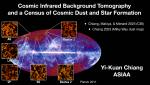
Cosmic Infrared Background Tomography and a Census of Cosmic Dust and Star Formation
Yi-Kuan Chiang ASIAA
The cosmic far-infrared background (CIB) encodes dust emission from all galaxies and carries valuable information on structure formation, star formation, and chemical enrichment across cosmic time. However, its redshift-dependent spectrum remains poorly constrained due to line-of-sight projection effects. We address this in [arXiv:2504.05384][1] by cross-correlating 11 far-infrared intensity maps spanning a 50-fold frequency range from Planck, Herschel, and IRAS, with spectroscopic galaxies and quasars from SDSS I-IV tomographically. We mitigate foregrounds using [CSFD][2], a CIB-free Milky Way dust map, and also remove the tomographic SZ background from hot gas in the cosmic web detected in [arXiv:2006.14650][3]. These cross-correlation amplitudes on two-halo scales trace bias-weighted CIB redshift distributions and collectively yield a 60σ detection of the evolving CIB spectrum, sampled across hundreds of rest-frame frequencies over 0 < z < 4. We break the bias-intensity degeneracy by adding monopole information from FIRAS. The recovered CIB spectrum reveals a dust temperature distribution that is broad, spanning the full range of host environments, and moderately evolving. Using low-frequency CIB amplitudes, we constrain cosmic dust density, Ω_dust, which peaks at z = 1-1.5 and declines threefold to the present. Our wide spectral and sky coverages enable a determination of the total infrared luminosity density with negligible cosmic variance across 90% of cosmic time. This yields a more precise yet consistent constraint on the cosmic star formation history compared to the Madau & Dickinson (2014) compilation. Additionally, we find that star formation occurs in a mode that is, on average, 80% dust-obscured at z = 0 and 60% at z = 4. Our results, based on intensity mapping, are complete, requiring no extrapolation to faint galaxies or low-surface-brightness components. We release our tomographic CIB spectrum and redshift distributions in [this link][4] as a public resource for future studies of the CIB, both as a cosmological matter tracer and CMB foreground. [1]: https://arxiv.org/abs/2504.05384 [2]: https://arxiv.org/abs/2306.03926 [3]: https://arxiv.org/abs/2006.14650 [4]: https://zenodo.org/records/15149425
Baryon Fraction in Halos: Observational Constraints from HI, X-ray, and Stellar Components
Ajay DevFeedback processes, particularly from active galactic nuclei (AGN), play a crucial role in redistributing baryons within halos. These mechanisms can displace gas to halo outskirts or eject it entirely, leading to baryon fractions below the cosmic mean. While simulations such as TNG, SIMBA, and EAGLE predict these effects across a wide halo mass range, observational constraints remain largely limited to high-mass groups and clusters. In this talk, I will present a systematic analysis of the observed baryon content of halos in the local universe across a mass range of $10^{10} - 10^{15} M_{\odot}$, using a compilation of empirical measurements from the literature. We quantify the contributions of hot gas, stars, and cold gas to the total baryon budget, constructing baryonic mass-to-halo mass scaling relations. We also use the latest eROSITA and ASKAP data to provide the current constraints on the average hot gas and cold gas content in halos through stacking analysis. The baryonic scaling relations are constructed from group- and cluster-scale halos down to $10^{12} M_{\odot}$ for all three components, while additional individual galaxy measurements allow us to extend HI and stellar mass scaling relations to $10^{10} M_{\odot}$. By combining these relations with the halo mass function, we then determine the baryon density distribution as a function of halo mass and calculate the cosmic mass densities of stars, HI, and hot gas within halos in the local universe. Our results provide key observational constraints on the distribution of baryons in the local universe, offering insights into potential mechanisms, such as feedback, that regulate baryon retention and redistribution.