Format results
-
-
-
Panel Discussion
Catherine Kallin - McMaster University , Sarah Shandera - Pennsylvania State University , Melanie Campbell - Guelph-Waterloo Physics Institute , Marianne Fedunkiw - York University
-
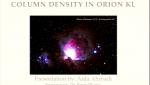
Determination of Total C18O Column Density in Orion KL
Aida Ahmadi - University of Calgary
-
-
Detection of Magnetic Fields in Cool Supergiants
Nikta Javanfar - Brock University
-
-
Gamma Ray Bursts and the Principle of Relative Locality
Anna McCoy - Argonne National Laboratory
-
Deformations of Lifshitz Holography in Higher Dimensions
Miok Park - Korea Institute for Advanced Study
-
Radiation Instability for a Matter Bounce
Johanna Karouby - McGill University
-
-
-
-
Neutron Stars and Fundamental Physics
Neutron stars are collapsed remnants of massive stars. One form of neutron star, pulsars, produce clock-like radio pulses, a result of their rotation combined with a misalignment of their rotation and magnetic axes. These pulses can be used in a variety of experiments in fundamental physics… -
Panel Discussion
Catherine Kallin - McMaster University , Sarah Shandera - Pennsylvania State University , Melanie Campbell - Guelph-Waterloo Physics Institute , Marianne Fedunkiw - York University
-
Determination of Total C18O Column Density in Orion KL
Aida Ahmadi - University of Calgary
The large number of high-energy rotational lines of C18O, available via the Herschel Space Observatory, provides an unprecedented ability to model the total C18O column density in hot cores. Using the emission from all the observed lines (up to J=16-15) we use an automated algorithm to model all… -
Searching for Neutron Stars in Disguise with NASA's Chandra X-ray Observatory
Alina Chen He - McGill University
Neutron stars are the collapsed cores of massive stars that went under supernova explosions. They are found with high surface magnetic fields, rapid but steady rotation and high density comparable to that inside an atomic nucleus. In the past 20 years, many different classes of neutron stars have… -
Detection of Magnetic Fields in Cool Supergiants
Nikta Javanfar - Brock University
Magnetic fields of stars can provide insight on their structure and evolution. These magnetic fields can be detected by exploiting the Zeeman effect. The theory behind detection and the method of Lease Squares Deconvolution will be described and preliminary results will be presented. -
Exploring Dark Matter in a Leptophilic Two-Higgs-Doublet Model
A recent analysis of gamma rays from the centre of our galaxy has provided possible evidence for a dark matter annihilation signal, with the dark matter taking the form of low-mass WIMPs annihilating predominantly to taus. We study an extended Higgs model proposed to yield such a dark matter… -
Gamma Ray Bursts and the Principle of Relative Locality
Anna McCoy - Argonne National Laboratory
TBA -
Deformations of Lifshitz Holography in Higher Dimensions
Miok Park - Korea Institute for Advanced Study
(n+1)-dimensional Lifshitz spacetime is deformed by logarithmic expansions in the way to admit a marginally relevant mode in which z is restricted by n=z+1. According to the holographic principle, the deformed spacetime is assumed to be dual for quantum critical theories, and then thermodynamics of… -
Radiation Instability for a Matter Bounce
Johanna Karouby - McGill University
In this talk I will discuss an alternative to infation models, namely non singular bouncing models.Their advantage is to supress both the transplanckian problem and the big bang singularity. It also gives a scale invariant power spectrum in the case of amatter bounce.First we will study a toy model… -
Quantum Vacuum Polarization Effects and the Estimation of the Stabel Vacuum Lifetime in the Field of a Superheavy Necleus
The vacuum polarization effects in superstrong Coulomb and laser fields are considered from the point of view of the generalized quantum dynamics formalism. The vacuum decay time in superstrong electromagnetic field is discussed. -
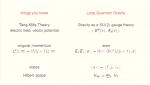
What's the Entropy of Gravity?
Francesca Vidotto - Western University
I present a proposal, originally motivated by a result in graph theory: the entropy function of a density matrix naturally associated to a simple undirected graph, is maximized, among all graphs with a fixed number of links and nodes, by regular graphs.I recover this result starting from the…