Format results
-
Welcome to Perimeter Institute and the EHT 2014 Conference
Neil Turok - University of Edinburgh
-
-
Growth of supermassive black holes and their relationships to their host galaxies
Marta Volonteri - Institut d'Astrophysique de Paris
-
Polarized emission from Black Hole Accretion Disks and Jets
Jonathan McKinney - University of Maryland, College Park
-
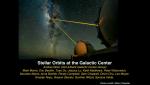
Stellar Orbits at the Galactic Center
Andrea Ghez - University of California, Los Angeles
-
-
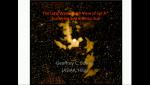
The Size and Morphology of Sgr A* at 7mm
Geoff Bower - Academia Sinica
-
Particle Acceleration and Non-thermal Emission in Radiatively Inefficient Accretion Flows
Eliot Quataert - University of California, Berkeley
-
Discussion 1
Charles Gammie - University of Illinois Urbana-Champaign
-
Detection and Variability of Closure Phases in Sgr A*
Vincent Fish - Massachusetts Institute of Technology (MIT)
-
-
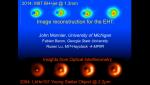
Optimized Image Reconstruction: Insights from Optical Interferometry
John Monnier - University of Michigan–Ann Arbor
-
-
-
Growth of supermassive black holes and their relationships to their host galaxies
Marta Volonteri - Institut d'Astrophysique de Paris
Black holes are the engines that power quasars and active galactic nuclei throughout cosmic time. The masses of black holes in nearby galaxies define clear correlations with the properties of their host galaxies. These results suggest that black holes, while a thousand times lighter than the galaxy… -
Polarized emission from Black Hole Accretion Disks and Jets
Jonathan McKinney - University of Maryland, College Park
We discuss how polarized emission can place constraints on the properties of accretion flows and jets in the strong gravity regime for systems like SgrA* and M87 being observed by the Event Horizon Telescope. -
Stellar Orbits at the Galactic Center
Andrea Ghez - University of California, Los Angeles
Over the last 20 years, advances in high angular resolution imaging technology has enabled the motions of individual stars to be tracked at the Galactic Center. This has provided the best evidence to date not only for the presence of a supermassive black hole at the center of our Galaxy, but for the… -
Constraints on Sgr A*s accretion geometry and plasma characteristics from the 3Msec Chandra (+ multiwavelength) campaign
Sera Markoff - Universiteit van Amsterdam
Sgr A* is one of the few black holes whose capture radius is just resolvable with the -
The Size and Morphology of Sgr A* at 7mm
Geoff Bower - Academia Sinica
Long wavelength measurements provide sensitive probes of the intrinsic structure of Sgr A* and of the scattering properties of the line-of-sight interstellar medium. At this wavelength, scattering dominates the apparent size of the source but careful closure amplitude techniques can provide highly… -
Particle Acceleration and Non-thermal Emission in Radiatively Inefficient Accretion Flows
Eliot Quataert - University of California, Berkeley
I summarize several physical processes that can produce efficient particle acceleration in radiatively inefficient accretion flows. I then describe the implications for non-thermal emission and EHT observations of Sgr A*. -
-
Detection and Variability of Closure Phases in Sgr A*
Vincent Fish - Massachusetts Institute of Technology (MIT)
-
Detection and Implications of Horizon-Scale Polarization in Sgr A*
The Event Horizon Telescope has measured compact emission in Sgr A* and M87 at resolutions comparable to their event horizons. Polarimetry with the EHT enables a powerful extension of this work, mapping magnetic field structures via the highly polarized synchrotron emission that is thought to… -
Optimized Image Reconstruction: Insights from Optical Interferometry
John Monnier - University of Michigan–Ann Arbor
The radio community pioneered the use of closure phases to allow interferometric imaging even when fringe phases are compromised by atmospheric turbulence or unstable reference clocks. Eventually, better receivers and observing methods allowed phase referencing to provide direct measures of complex…