


Format results
-

Homotopy theory and quantum field theories
Mayuko Yamashita - Perimeter Institute for Theoretical Physics
-

Physics Meets Geometry: a fuzzy sphere Odyssey in critical phenomena
Yin-Chen He - Stony Brook University
-

Deep Probabilistic Models for Cosmological Analysis and Beyond
Biwei Dai - University of California, Berkeley
-
Cosmological dynamics of light dark bosons
Junwu Huang - Perimeter Institute for Theoretical Physics
-
Algebraic geometry at the limits of perturbative QFT and dark matter in moduli spaces
Michael Borinsky - Perimeter Institute for Theoretical Physics
-
Arithmetic Electric-Magnetic Duality
David Ben-Zvi - The University of Texas at Austin
-
-

Dos and Don’ts of Folding Time
Sebastian Mizera - Princeton University
-
Dynamical Formation of Merging Compact Binaries
Dong Lai - Cornell University
-
Nuclear astrophysics with gravitational wave observations
Jocelyn Read - California State University, Fullerton
-
-
The Hycean Paradigm in Exoplanet Habitability - VIRTUAL
Nikku Madhusudhan - University of Cambridge
-
Homotopy theory and quantum field theories
Mayuko Yamashita - Perimeter Institute for Theoretical Physics
Recently, there has been a growing interest in the relations between homotopy theory in mathematics and theoretical physics. Homotopy theory is used to classify and study physical systems. Also, physically motivated conjectures have led to many interesting developments in homotopy theory. I have… -
Physics Meets Geometry: a fuzzy sphere Odyssey in critical phenomena
Yin-Chen He - Stony Brook University
Historically, the synergy between physics and geometry, from the times of Archimedes and Newton to the era of Einstein, has repeatedly been the catalyst for pivotal breakthroughs in physics and mathematics. In this talk, I will introduce a new narrative demonstrating how physics and geometry… -
Deep Probabilistic Models for Cosmological Analysis and Beyond
Biwei Dai - University of California, Berkeley
Current and future weak lensing surveys contain significant information about our universe. However, their optimal cosmological analysis is challenging, with traditional analyses often resulting in information loss due to reliance on summary statistics like two-point correlation functions. While… -
Cosmological dynamics of light dark bosons
Junwu Huang - Perimeter Institute for Theoretical Physics
Light bosons, including light axions, dark photons, and dilaton/moduli, are well motivated extensions to the Standard Model of particle physics and intriguing dark matter candidates. Much progress has been made in recent years in both astrophysical and lab searches for these light bosons with the… -
Algebraic geometry at the limits of perturbative QFT and dark matter in moduli spaces
Michael Borinsky - Perimeter Institute for Theoretical Physics
Feynman diagrams and the associated integrals are crucial in perturbative quantum field theory for translating theory input into concrete, observable quantities. I will talk about the fascinating interplay of physics and mathematics that emerges from the ensemble of these diagrams. From linear… -
Arithmetic Electric-Magnetic Duality
David Ben-Zvi - The University of Texas at Austin
The Langlands program is a grand organizing vision for a large slice of number theory and representation theory. A shockingly accurate metaphor for the Langlands program has emerged as electric-magnetic duality in four-dimensional gauge theory, but where the role of spacetime is played by objects… -
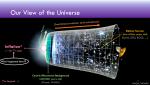
Galaxy Surveys: A Precision Primordial Probe
What happened in the earliest moments of the Universe? Despite decades of theoretical and observational work, a detailed understanding of the primordial Universe has remained elusive. In this talk, I will show how surveys of millions of galaxies can shed new light on these issues by constraining the… -
Dos and Don’ts of Folding Time
Sebastian Mizera - Princeton University
I will summarize recent progress in uncovering the analytic structure of scattering amplitudes. The overarching theme will be exploiting new intricate ways of analytically continuing time, extending beyond the Wick rotation. I will highlight a broad range of applications: from high-precision… -
Dynamical Formation of Merging Compact Binaries
Dong Lai - Cornell University
The recent breakthrough in the detection of gravitational waves (GWs) from merging black hole (BH) and neutron star (NS) binaries by advanced LIGO/Virgo has generated renewed interest in understanding the formation mechanisms of merging compact binaries, from the evolution of massive stellar… -
Nuclear astrophysics with gravitational wave observations
Jocelyn Read - California State University, Fullerton
Gravitational-wave observatories have established a new field of transient astronomy. The most recent LIGO-Virgo-KAGRA catalog, GWTC-3, identified 90 merging binaries, which range from a double neutron star with a total mass of 2.7 at 40 Mpc (GW170817) to a double black hole with a total mass of 150… -
Why I think Double-scaled SYK at infinite Temperature is a Theory of de Sitter Space
Leonard Susskind - Stanford University
Abstract TBA --- Zoom link https://pitp.zoom.us/j/98123499206?pwd=QWlHcFBJWE8zRTlyT1A5WUVsQS9NUT09 -
The Hycean Paradigm in Exoplanet Habitability - VIRTUAL
Nikku Madhusudhan - University of Cambridge
Atmospheric characterisation of habitable-zone exoplanets is a major frontier of exoplanet science. The detection of atmospheric signatures of habitable Earth-like exoplanets is challenging due to their small planet-star size contrast and thin atmospheres with high mean molecular weight. Recently, a…