Format results
-
Random constructions in Quantum Information Theory
Patrick Hayden - Stanford University
-
Hausdorff and spectral dimension of random graphs
Bergfinnur Durhuus - University of Copenhagen
-
Anderson localization and adiabatic quantum optimization
Jeremie Roland - NEC Laboratories America (Princeton)
-
-
Approximate vs complete quantum information erasure: constructions and applications
Andreas Winter - University of Bristol
-
Random techniques and Bell inequalities
Marius Junge - University of Illinois Urbana-Champaign
-
On the comparison of volumes of quantum states
Deping Ye - University of Missouri
-
-
Some limit theorems in operator-valued noncommutative probability
Serban Belinschi - University of Saskatchewan
-
Singular values, complex eigenvalues and the single ring theorem
Ofer Zeitouni - University of Minnesota
-
Ensembles of random quantum states
Karol Zyczkowski - Jagiellonian University
-
-
-
Hausdorff and spectral dimension of random graphs
Bergfinnur Durhuus - University of Copenhagen
We introduce a class of probability spaces whose objects are infinite graphs and whose probability distributions are obtained as limits of distributions for finite graphs. The notions of Hausdorff and spectral dimension for such ensembles are defined and some results on their value in koncrete… -
Anderson localization and adiabatic quantum optimization
Jeremie Roland - NEC Laboratories America (Princeton)
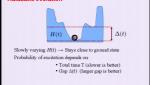
Understanding NP-complete problems is a central topic in computer science. This is why adiabatic quantum optimization has attracted so much attention, as it provided a new approach to tackle NP-complete problems using a quantum computer. The efficiency of this approach is limited by small spectral… -
Convergence rates for arbitrary statistical moments of random quantum circuits
Lorenza Viola - Dartmouth College
TBA -
Approximate vs complete quantum information erasure: constructions and applications
Andreas Winter - University of Bristol
It is a fundamental, if elementary, observation that to obliterate the quantum information in n qubits by random unitaries, an amount of randomness of at least 2n bits is required. If the randomisation condition is relaxed to perform only approximately, we obtain two answers, depending on the norm… -
Random techniques and Bell inequalities
Marius Junge - University of Illinois Urbana-Champaign
In this talk we will give an overview of how different probabilistic and quantum probabilistic techniques can be used to find Bell inequalities with large violation. This will include previous result on violation for tripartite systems and more recent results with Palazuelos on probabilities for… -
On the comparison of volumes of quantum states
Deping Ye - University of Missouri
Entangled (i.e., not separable) quantum states play fundamental roles in quantum information theory; therefore, it is important to know the ''size'' of entanglement (and hence separability) for various measures, such as, Hilbert-Schmidt measure, Bures measure, induced measure, and $\alpha$-measure… -
Isotropic Entanglement
Ramis Movassagh - MIT-IBM Watson AI Lab
One of the major problems hindering progress in quantum many body systems is the inability to describe the spectrum of the Hamiltonian. The spectrum corresponds to the energy spectrum of the problem and is of out-most importance in accounting for the physical properties of the system. A perceived… -
Some limit theorems in operator-valued noncommutative probability
Serban Belinschi - University of Saskatchewan
A famous result in classical probability - Hin\v{c}in's Theorem - establishes a bijection between infinitely divisible probability distributions and limits of infinitesimal triangular arrays of independent random variables. Analogues of this result have been proved by Bercovici and Pata for scalar… -
Singular values, complex eigenvalues and the single ring theorem
Ofer Zeitouni - University of Minnesota
Limit laws and large deviations for the empirical measure of the singular values for ensembles of non-Hermitian matrices can be obtained based on explicit distributions for the eigenvalues. When considering the eigenvalues, however, the situation changes dramatically, and explicit expressions for… -
-
Random graph states and area laws
We associate to any unoriented graph a random pure quantum state, obtained by randomly rotating a tensor product of Bell states. Marginals of such states define new ensembles of density matrices, which we study in the asymptotical regime of large Hilbert spaces. Limit eigenvalue distributions are…