Format results
-
Welcome to “The Unruh Fest”
Silke Weinfurtner - University of Nottingham
-
-
What are the laws of quantum thermodynamics?
Jonathan Oppenheim - University College London
-
Microlocal analysis in quantum field theory on curved spacetime and related topics
Marek Radzikowski - American University of Afghanistan
-
Acceleration Radiation: The Prophet and the Heretics
Stephen Fulling - Texas A&M University
-
-
Hydrodynamic simulations of rotating and non-rotating black holes
Silke Weinfurtner - University of Nottingham
-
-
Mass gap for black hole formation in higher derivative and ghost-free gravity
Valeri Frolov - University of Alberta
-
Consciousness Does Not Cause Quantum Zeno Effect
Masahiro Hotta - Tohoku University
-
On the Observability of the Unruh Effect
George Matsas - Universidade Estadual Paulista (UNESP)
-

Fun with ideal plasmas
Ted Jacobson - University of Maryland, College Park
-
-
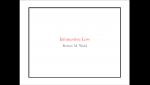
Information Loss
Robert Wald - University of Chicago
It is argued that information is lost in the process of black hole formation and evaporation. -
-
Microlocal analysis in quantum field theory on curved spacetime and related topics
Marek Radzikowski - American University of Afghanistan
Presented is a discussion of quantum field theory on curved spacetime and of microlocal analysis, with an emphasis on the way that these two areas connected for me personally through a specific problem, namely that of resolving Kay's singularity conjecture for two point functions of a linear scalar… -
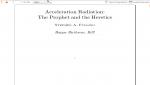
Acceleration Radiation: The Prophet and the Heretics
Stephen Fulling - Texas A&M University
I review the contentious question, "Does a uniformly accelerated detector radiate?" As Audretsch and Muller pointed out long ago, this is partly a semantic dispute. The talk draws on recent discussions with Alex Calogeracos and George Matsas. -
Experimental Quantum Error Correction
The last decade has seen the impressive development of quantum information science, both in theory and in experiment. There are many measures that can be used to assess the achievements in the field: new algorithms, new applications and larger quantum processors, to name a few. The discovery of… -
Hydrodynamic simulations of rotating and non-rotating black holes
Silke Weinfurtner - University of Nottingham
In 1981 Bill discovered an analogy between the propagation of fields in the vicinity of astrophysical black holes and the that of small excitations in fluids. He postulated that this analogy allows one to test, challenge and verify, in tabletop experiments, the elusive processes of black hole mass… -
-
Mass gap for black hole formation in higher derivative and ghost-free gravity
Valeri Frolov - University of Alberta
The problem of the gravitational collapse of small mass in the higher derivative and ghost free theories of gravity is discussed. It will be demonstrated how higher derivative and non-local modifications of gravity equations regularizes static and dynamical solutions. Boosting a static solution of… -
Consciousness Does Not Cause Quantum Zeno Effect
Masahiro Hotta - Tohoku University
The quantum Zeno effect is often very controversial in the context of consciousness problems. Frequent direct measurements of a quantum system freeze its time evolution. Then what happes if an observer continuously watches a Schrodinger's cat from the start of the experiment? Naively this looks like… -
On the Observability of the Unruh Effect
George Matsas - Universidade Estadual Paulista (UNESP)
This year marks the 40’th anniversary of the Unruh effect as described at the first Marcel Grossmann meeting in 1975. We revisit it with emphasis on the observability issue which might be a concern at first sight, since the linear acceleration needed to reach a temperature 1 K is of order 10^20 m/s… -
Fun with ideal plasmas
Ted Jacobson - University of Maryland, College Park
I will sketch a few interesting phenomena involving ideal plasmas, including helicity conservation, frozen flux, the Blandford-Znajek mechanism, and self-confined Poynting jets, using the language of differential forms.