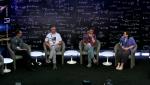
Panel Discussion
-
Gilbert Holder University of Illinois Urbana-Champaign
- Gwen Rudie

Cosmologists at Perimeter Institute seek to help pin down the constituents and history of our universe, and the rules governing its origin and evolution. Many of the most interesting clues about physics beyond the standard model (e.g., dark matter, dark energy, the matter/anti-matter asymmetry, and the spectrum of primordial density perturbations], come from cosmological observations, and cosmological observations are often the best way to test or constrain a proposed modification of the laws of nature, since such observations can probe length scales, time scales, and energy scales that are beyond the reach of terrestrial laboratories.
Gilbert Holder University of Illinois Urbana-Champaign
Stella Koch Ocker California Institute of Technology
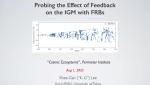
Khee-Gan Lee Kavli Institute for the Physics and Mathematics of the Universe
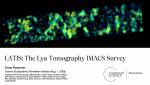
Andrew Newman Carnegie Observatories
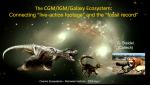
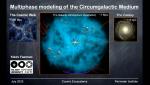
Brian McNamara University of Waterloo
Claude-André Faucher-Giguère Northwestern University
Freeke van de Voort Cardiff University
Cassandra Lochhaas Center for Astrophysics | Harvard & Smithsonian